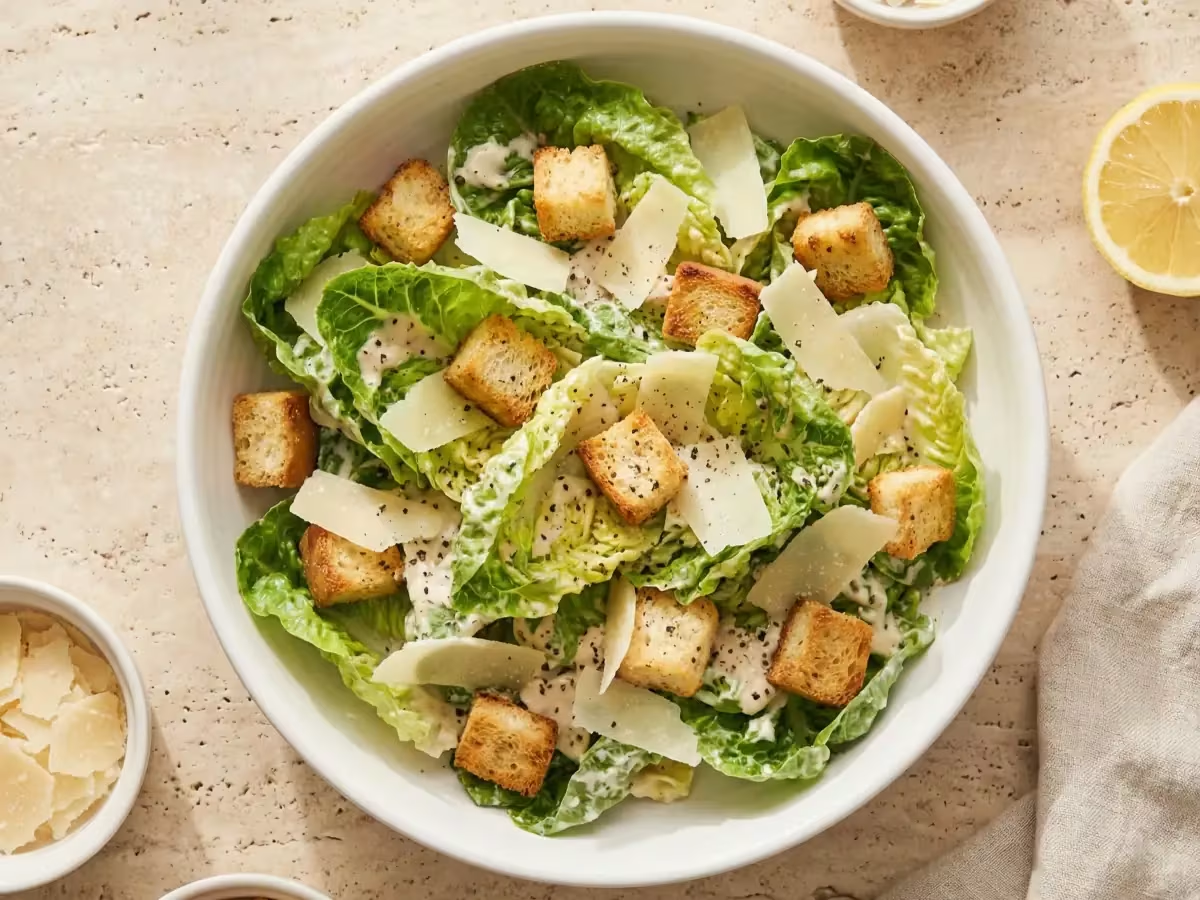
Tangerly.com (AI-generated)
The Ultimate Classic Caesar Salad
Master the authentic Caesar Salad with a rich, homemade creamy dressing and crunchy garlic croutons. Better than a restaurant and ready in just 30 minutes!
Servings4
Preparation Time30 m
DifficultyEasy
Calories796 kcal
LunchDinnerSaladAppetizerunder 1hAmericanItalianCold PrepVegetablesDairy & EggsPartyBarbecueMeal Prep / Lunchbox
Ingredients
|
Caesar Dressing
- 2 large egg yolks
- 3 cloves garlic
- 5 anchovy fillets in oil, finely chopped
- 60 ml fresh lemon juice
- 1 tbsp Dijon mustard
- 200 ml mild olive oil
- 50 grams freshly grated Parmesan cheese
- Freshly cracked black pepper to taste
Homemade Croutons
- 200 grams stale bread (e.g., Ciabatta or Sourdough), cut into 2cm cubes
- 3 tbsp olive oil
- Salt and pepper to taste
The Salad
- 2 large heads Romaine lettuce
- Parmesan shavings for garnish
Instructions
Bake the croutons Preheat your oven to 190°C (375°F) In a bowl, toss the bread cubes with the olive oil, a crushed clove of garlic, salt, and pepper until evenly coated Spread them in a single layer on a baking sheet. Bake for 10-15 minutes, tossing halfway through, until they are golden brown and crunchy.Tip Discard the crushed garlic clove before the croutons cool down so they don't develop a bitter taste.
Build the flavor base In a medium mixing bowl, whisk together the egg yolks, chopped garlic, chopped anchovies, lemon juice, and Dijon mustard Whisk until fully combined This mixture forms the savory foundation of your dressing.
Emulsify the dressing This is the most critical step While whisking constantly and vigorously, begin adding the olive oil to the yolk mixture Start with just a few drops at a time. Once the mixture starts to thicken, you can increase to a slow, steady stream. The vigorous whisking creates a stable, creamy emulsion. Once all the oil is incorporated and the sauce is thick and velvety, stir in the grated Parmesan and season with black pepper.
Prep the greens Wash the Romaine hearts and—crucially—dry them completely Moisture is the enemy of a good Caesar salad because it prevents the creamy dressing from clinging to the leaves Use a salad spinner or pat every leaf dry with paper towels. Tear the leaves into bite-sized pieces and place them in a large bowl.
Assemble and serve Pour about two-thirds of the dressing over the lettuce Use your hands to gently toss the salad, massaging the dressing into the leaves until they are lightly and evenly coated Add the homemade croutons and half of the Parmesan shavings, then toss again. Plate immediately, garnishing with the remaining Parmesan.
Tips
When making the dressing, add the oil drop by drop initially. If you pour too fast, the sauce will 'break' (separate). If this happens, don't panic! Start with a fresh egg yolk in a clean bowl and slowly whisk the broken sauce into it.
The secret to the crunch is in the lettuce prep. It must be ice-cold and bone dry. Use a salad spinner; if you don't have one, towel-dry every leaf. Water makes the dressing slide right off the leaves, leaving you with a sad, soggy salad.
Skip the pre-shredded cheese in a bag. It often contains anti-caking agents (like potato starch) that ruin the texture of your dressing. Buy a wedge of Parmigiano Reggiano and grate it yourself just before serving. The flavor difference is massive.
Nutrition Information
(per serving)
The nutritional values provided are estimates and have been calculated automatically. Actual values may vary depending on the ingredients used and the method of preparation. This information is for informational purposes only and should not be treated as medical or dietary advice.
Calories796 kcal
Fat66 g
Protein17 g
Carbohydrates39 g
Sugar5 g
Sodium (Salt)892 mg(2.3 g)
Fun facts
Mexican, not Italian!
Despite the Italian-sounding name, the Caesar Salad was actually invented in Tijuana, Mexico. • It was created by Caesar Cardini, an Italian immigrant, around 1924. • His restaurant was a hotspot for American tourists crossing the border to escape Prohibition laws. • The original recipe was famously prepared tableside, adding an element of culinary theater to the dining experience.
The Science of Emulsification
The magic behind that thick, creamy texture isn't cream—it's science! • Egg yolks act as the emulsifier. They contain lecithin, which binds the lemon juice (water) and the olive oil together into a smooth mixture. • While the original recipe used coddled eggs (boiled for 1 minute), modern versions often use raw yolks for a richer result. Always use high-quality, fresh eggs. • Slow pouring is non-negotiable. Adding oil too fast breaks the chemical bond, resulting in a separated, oily mess.
The Umami Power of Anchovies
That savory, hard-to-place flavor in a great Caesar dressing? That's umami, largely thanks to the anchovies. • Many people who claim to hate anchovies actually love Caesar salad, not realizing the fish is the secret weapon. • They 'melt' into the dressing, providing a deep, salty backbone without tasting fishy. • Fun fact: Some early versions relied solely on Worcestershire sauce, which itself contains fermented anchovies!
Chef's Note
The Caesar Salad is a restaurant icon found on menus globally, but its history is as colorful as its flavor profile. Contrary to popular belief, it wasn't named after a Roman Emperor, but after its creator, Caesar Cardini, an Italian immigrant operating out of Tijuana, Mexico. Legend has it that during the Prohibition era of the 1920s, Cardini faced a rush of Fourth of July partygoers and a depleting pantry. He improvised with what he had—Romaine hearts, garlic, croutons, parmesan, olive oil, eggs, and Worcestershire sauce—whipping up the dressing tableside with dramatic flair. What keeps this salad in the culinary hall of fame is the perfect engineering of textures. We use sturdy Romaine leaves because they offer a refreshing 'snap' that holds up against the rich, velvety dressing without turning soggy. The dressing itself is a masterpiece of emulsion science: the savory depth of anchovies and garlic, the bright acid of lemon, and the richness of egg yolks create something far greater than the sum of its parts. Top it with homemade, golden-brown croutons, and you have a dish that is deeply satisfying and deceptively simple.
Tips
When making the dressing, add the oil drop by drop initially. If you pour too fast, the sauce will 'break' (separate). If this happens, don't panic! Start with a fresh egg yolk in a clean bowl and slowly whisk the broken sauce into it.
The secret to the crunch is in the lettuce prep. It must be ice-cold and bone dry. Use a salad spinner; if you don't have one, towel-dry every leaf. Water makes the dressing slide right off the leaves, leaving you with a sad, soggy salad.
Skip the pre-shredded cheese in a bag. It often contains anti-caking agents (like potato starch) that ruin the texture of your dressing. Buy a wedge of Parmigiano Reggiano and grate it yourself just before serving. The flavor difference is massive.
Nutrition Information
(per serving)
The nutritional values provided are estimates and have been calculated automatically. Actual values may vary depending on the ingredients used and the method of preparation. This information is for informational purposes only and should not be treated as medical or dietary advice.
Calories796 kcal
Fat66 g
Protein17 g
Carbohydrates39 g
Sugar5 g
Sodium (Salt)892 mg(2.3 g)
Fun facts
Mexican, not Italian!
Despite the Italian-sounding name, the Caesar Salad was actually invented in Tijuana, Mexico. • It was created by Caesar Cardini, an Italian immigrant, around 1924. • His restaurant was a hotspot for American tourists crossing the border to escape Prohibition laws. • The original recipe was famously prepared tableside, adding an element of culinary theater to the dining experience.
The Science of Emulsification
The magic behind that thick, creamy texture isn't cream—it's science! • Egg yolks act as the emulsifier. They contain lecithin, which binds the lemon juice (water) and the olive oil together into a smooth mixture. • While the original recipe used coddled eggs (boiled for 1 minute), modern versions often use raw yolks for a richer result. Always use high-quality, fresh eggs. • Slow pouring is non-negotiable. Adding oil too fast breaks the chemical bond, resulting in a separated, oily mess.
The Umami Power of Anchovies
That savory, hard-to-place flavor in a great Caesar dressing? That's umami, largely thanks to the anchovies. • Many people who claim to hate anchovies actually love Caesar salad, not realizing the fish is the secret weapon. • They 'melt' into the dressing, providing a deep, salty backbone without tasting fishy. • Fun fact: Some early versions relied solely on Worcestershire sauce, which itself contains fermented anchovies!
Chef's Note
The Caesar Salad is a restaurant icon found on menus globally, but its history is as colorful as its flavor profile. Contrary to popular belief, it wasn't named after a Roman Emperor, but after its creator, Caesar Cardini, an Italian immigrant operating out of Tijuana, Mexico. Legend has it that during the Prohibition era of the 1920s, Cardini faced a rush of Fourth of July partygoers and a depleting pantry. He improvised with what he had—Romaine hearts, garlic, croutons, parmesan, olive oil, eggs, and Worcestershire sauce—whipping up the dressing tableside with dramatic flair. What keeps this salad in the culinary hall of fame is the perfect engineering of textures. We use sturdy Romaine leaves because they offer a refreshing 'snap' that holds up against the rich, velvety dressing without turning soggy. The dressing itself is a masterpiece of emulsion science: the savory depth of anchovies and garlic, the bright acid of lemon, and the richness of egg yolks create something far greater than the sum of its parts. Top it with homemade, golden-brown croutons, and you have a dish that is deeply satisfying and deceptively simple.