Tangerly.com (AI-generated)
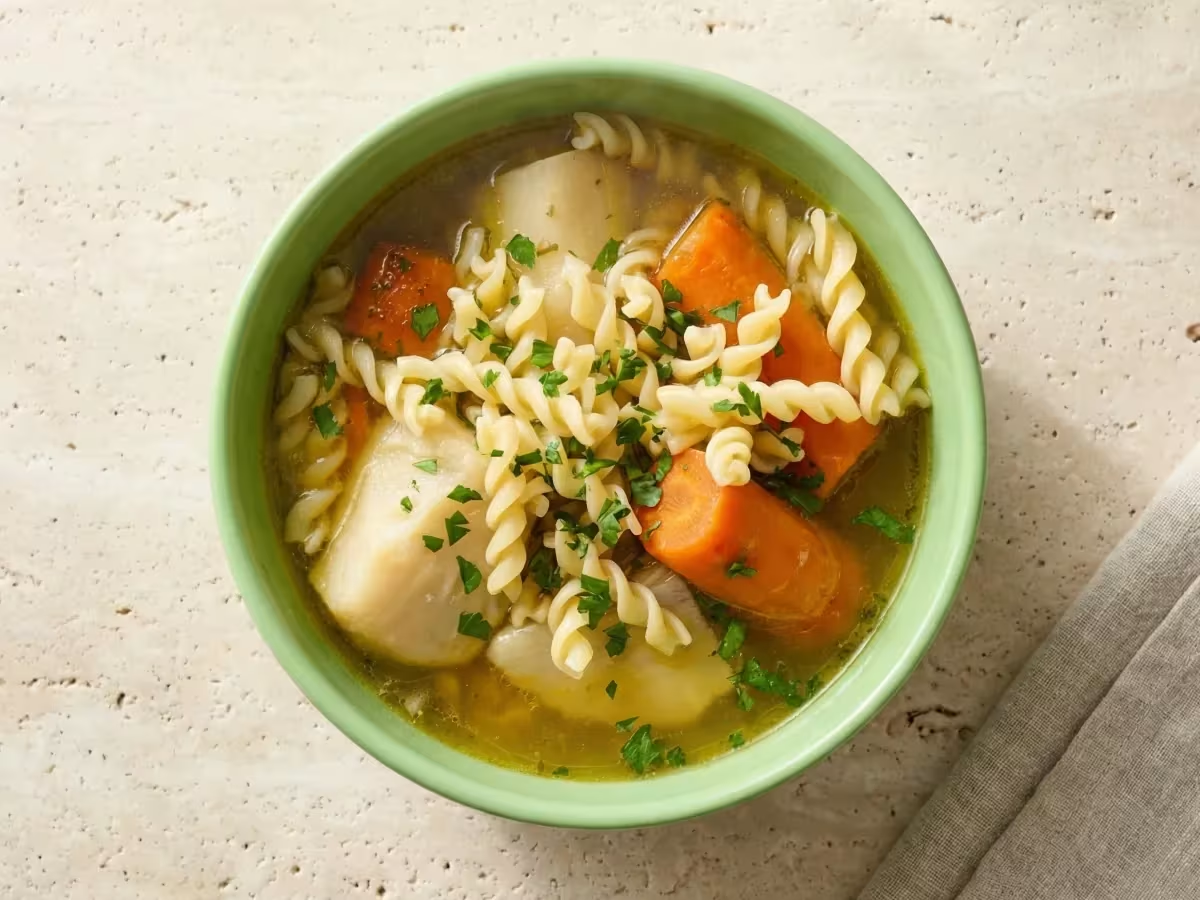
Traditional Polish Chicken Soup
The ultimate comfort food. This authentic Polish Rosół is a crystal-clear, golden broth simmered slowly for deep flavor. It heals the soul!
Servings8
Preparation Time5 h
DifficultyEasy
Calories423 kcal
over 1hPolishCookingPoultryVegetablesFor KidsBudget-FriendlySoupLunch
Ingredients
|
- 2 chicken legs (quarters)
- 1 beef soup bone (e.g., short rib or brisket)
- 1 chicken carcass (frame/back)
- 3 ½ liters cold water
- 3 large carrots
- 2 parsley roots (use parsnips if unavailable)
- ½ celeriac (celery root)
- 1 large leek
- 1 large onion
- 3 bay leaves
- 5 allspice berries
- 10 black peppercorns
- Salt to taste (approx. 1 level tbsp)
- Fresh parsley leaves (for garnish)
- Your favorite fine egg noodles (cooked separately)
- Dried lovage (optional)
Instructions
The Cold Start Wash all the meat (chicken legs, beef bone, and carcass) thoroughly under running water Place them in a large stockpot and pour in the cold water Usecold water only—this is crucial for drawing the flavor out of the bones and into the broth.
The Skim Bring the pot to a boil over medium heat As soon as it boils, you'll see gray foam (scum) floating on top Grab a slotted spoon and patiently skim all of this off. This step ensures your soup stays clear, not cloudy.
The Long Simmer Once the broth is clear of foam, turn the heat down to the absolute minimum The soup should barely bubble (we call this "blinking") Cover with the lid slightly ajar and let just the meat simmer for 3 to 4 hours.
Prep the Roots While the meat is doing its thing, peel the carrots, parsley roots, and celeriac Cut them into large chunks Cut the leek in half lengthwise (but not all the way through) and wash out any hidden grit.
Charring the Onion Peel the loose, dirty layers off the onion, butkeep the last layer of golden skin on Cut it in half and place the cut sides down on a dry, hot skillet (or directly over a gas burner flame) until they are pitch black and charred This burnt onion is the secret to the soup's rich amber color.
Flavor Infusion Add the prepared vegetables, the charred onion, and spices (allspice, bay leaves, peppercorns) to the pot Continue simmering on low heat for another 60 minutes until the vegetables are tender.
The Grand Finale Towards the end, season with salt to taste and add the dried lovage if you have it For that perfect, restaurant-quality look, strain the broth through a fine-mesh sieve Serve piping hot with separately cooked noodles and a shower of fresh parsley.
Tips
For a deeper, more complex flavor, always mix your meats. A combo of 1kg chicken and 0.5kg beef (like short rib) adds incredible depth that chicken alone can't achieve.
Leeks love to hide dirt! To clean them properly, trim the root, slice vertically down the green part (leaving the white base intact), fan out the leaves, and rinse under running water.
If you're saving the soup for tomorrow, fish out the onion and leek immediately after cooking. These vegetables ferment faster than the others and can make your beautiful soup go sour overnight.
Can't find lovage? Celery leaves are a decent substitute, though lovage has a unique, intense 'umami' punch that really mimics that nostalgic Sunday dinner taste.
Made too much? Strain the pure broth (no veggies or noodles) and freeze it in ice cube trays. These are homemade 'stock cubes' that will instantly upgrade your sauces and risottos later!
Serving Suggestions
Turn leftovers into Tomato Soup! Just add tomato paste or passata to the broth the next day—it's a Polish classic.
Don't toss the meat! Shred the chicken and beef to make filling for pierogi, croquettes, or savory crepes.
Blend the leftover boiled veggies into a thick paste to naturally thicken gravies or sauces.
Nutrition Information
(per serving)
The nutritional values provided are estimates and have been calculated automatically. Actual values may vary depending on the ingredients used and the method of preparation. This information is for informational purposes only and should not be treated as medical or dietary advice.
Calories423 kcal
Fat17 g
Protein20 g
Carbohydrates49 g
Sugar8 g
Sodium (Salt)975 mg(2.5 g)
Fun facts
Why we skim the foam
That gray foam you see at the start? It's just coagulated protein (albumin) from the meat. • If you leave it, it breaks down into tiny particles • Skimming it off is the #1 rule for achieving that beautiful, glass-like clarity in your soup
The burnt onion magic
Charring the onion (skin on!) is an old grandma trick that changes everything. • The heat triggers the Maillard reaction and caramelizes the sugars • This gives the broth a stunning golden-amber hue • It adds a subtle, smoky sweetness that defines the taste of true Rosół
Cold water vs. Hot water
Why do we insist on cold water? • Hot water shocks the meat, sealing the pores and trapping flavor inside (great for juicy meat, bad for soup) • Cold water allows for a slow extraction • As the temperature rises slowly, juices and collagen are released into the water, creating a rich, full-bodied stock
Lovage: The natural flavor bomb
That specific savory smell of Rosół often comes from Lovage (Lubczyk). • It's often called the "Maggi herb" because it smells exactly like the seasoning sauce • It contains sotolon, a compound responsible for that intense savory aroma • Even a pinch works as a powerful, natural flavor enhancer
More than just soup
Rosół is considered a traditional remedy for colds and flu. • This reputation dates back to the 12th century when Maimonides prescribed chicken broth for asthma and leprosy • Modern science suggests hot chicken soup has mild anti-inflammatory properties • Plus, the steam helps clear congestion!
Chef's Note
If you walk into a Polish home on a Sunday afternoon, this is the smell that greets you. Rosół (pronounced *ro-sool*) isn't just soup; it's an institution. It's the "Jewish Penicillin" of Slavic cuisine—a golden, shimmering broth that cures colds, hangovers, and bad moods. The secret isn't in fancy techniques, but in patience. We cook this low and slow to extract every ounce of flavor from the meat and root vegetables. Trust me, once you try this deep, savory broth, you'll never go back to stock cubes again.
Tips
For a deeper, more complex flavor, always mix your meats. A combo of 1kg chicken and 0.5kg beef (like short rib) adds incredible depth that chicken alone can't achieve.
Leeks love to hide dirt! To clean them properly, trim the root, slice vertically down the green part (leaving the white base intact), fan out the leaves, and rinse under running water.
If you're saving the soup for tomorrow, fish out the onion and leek immediately after cooking. These vegetables ferment faster than the others and can make your beautiful soup go sour overnight.
Can't find lovage? Celery leaves are a decent substitute, though lovage has a unique, intense 'umami' punch that really mimics that nostalgic Sunday dinner taste.
Made too much? Strain the pure broth (no veggies or noodles) and freeze it in ice cube trays. These are homemade 'stock cubes' that will instantly upgrade your sauces and risottos later!
Serving Suggestions
Turn leftovers into Tomato Soup! Just add tomato paste or passata to the broth the next day—it's a Polish classic.
Don't toss the meat! Shred the chicken and beef to make filling for pierogi, croquettes, or savory crepes.
Blend the leftover boiled veggies into a thick paste to naturally thicken gravies or sauces.
Nutrition Information
(per serving)
The nutritional values provided are estimates and have been calculated automatically. Actual values may vary depending on the ingredients used and the method of preparation. This information is for informational purposes only and should not be treated as medical or dietary advice.
Calories423 kcal
Fat17 g
Protein20 g
Carbohydrates49 g
Sugar8 g
Sodium (Salt)975 mg(2.5 g)
Fun facts
Why we skim the foam
That gray foam you see at the start? It's just coagulated protein (albumin) from the meat. • If you leave it, it breaks down into tiny particles • Skimming it off is the #1 rule for achieving that beautiful, glass-like clarity in your soup
The burnt onion magic
Charring the onion (skin on!) is an old grandma trick that changes everything. • The heat triggers the Maillard reaction and caramelizes the sugars • This gives the broth a stunning golden-amber hue • It adds a subtle, smoky sweetness that defines the taste of true Rosół
Cold water vs. Hot water
Why do we insist on cold water? • Hot water shocks the meat, sealing the pores and trapping flavor inside (great for juicy meat, bad for soup) • Cold water allows for a slow extraction • As the temperature rises slowly, juices and collagen are released into the water, creating a rich, full-bodied stock
Lovage: The natural flavor bomb
That specific savory smell of Rosół often comes from Lovage (Lubczyk). • It's often called the "Maggi herb" because it smells exactly like the seasoning sauce • It contains sotolon, a compound responsible for that intense savory aroma • Even a pinch works as a powerful, natural flavor enhancer
More than just soup
Rosół is considered a traditional remedy for colds and flu. • This reputation dates back to the 12th century when Maimonides prescribed chicken broth for asthma and leprosy • Modern science suggests hot chicken soup has mild anti-inflammatory properties • Plus, the steam helps clear congestion!
Chef's Note
If you walk into a Polish home on a Sunday afternoon, this is the smell that greets you. Rosół (pronounced *ro-sool*) isn't just soup; it's an institution. It's the "Jewish Penicillin" of Slavic cuisine—a golden, shimmering broth that cures colds, hangovers, and bad moods. The secret isn't in fancy techniques, but in patience. We cook this low and slow to extract every ounce of flavor from the meat and root vegetables. Trust me, once you try this deep, savory broth, you'll never go back to stock cubes again.